
Industrialised construction is not just changing how buildings are delivered – it is changing how they are designed, coordinated and led. An Industrialised Construction Journal roundtable convened at Hawkins\Brown brought architects, contractors and industrialised construction specialists together to examine what manufacturing-led delivery means for design leadership, procurement, digital integration and the future role of the architect.

Participants
- Nigel Ostime – Hawkins\Brown
- Rory Bergin – HTA Design
- Suria Jones – Laing O’Rourke
- Andrew Pryke – BAM
- Anne Daw – HLM Architects
- Lucy Craig – McLaren Group
- Darren Richards – Cogent Consulting, Managing Director and Roundtable Facilitator
- Vincent Bolton – Industrialised Construction Journal, Editor
Turning industrialised thinking into a mainstream delivery model
Construction has spent decades talking about productivity, standardisation, Modern Methods of Construction, offsite manufacturing and Design for Manufacture and Assembly. Yet the sector still struggles to turn industrialised thinking into a consistent mainstream delivery model.
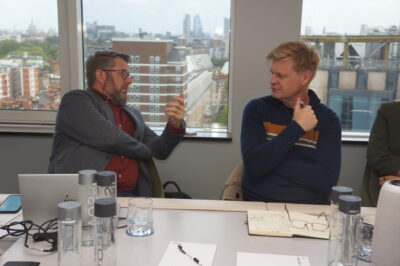
That challenge sat at the centre of a recent Industrialised Construction Journal roundtable hosted by Hawkins\Brown in London, where architects, contractors and industrialised construction specialists debated one of the sector’s most significant transitions: the move from bespoke, project-led design towards manufacturing-led systems.
Across the discussion, one theme kept returning: industrialised construction is not simply changing how buildings are delivered. It is changing how they are conceived, coordinated, procured and led.
Design is changing – not just delivery
One of the sharpest questions raised during the session was whether architecture has fully accepted what industrialised construction demands: not just a different delivery method, but a different design process.
Several participants argued that the industry still too often approaches industrialised construction retrospectively – designing conventionally, then attempting to apply MMC or offsite solutions later. For Nigel Ostime, that remains a fundamental barrier.
“I think it’s a mindset issue,” he explained. “Unless you genuinely think about industrialised processes from the beginning, you won’t operate in an industrialised construction mindset.”
Anne Daw argued that industrialised approaches are forcing architects to reconnect with the technical realities of construction in ways that traditional procurement models have gradually eroded.
“It reconnects us with how we build as architects and makes us more disciplined as designers,” she noted.
The point was not that manufacturing-led construction makes design less important. It makes design decisions earlier, more consequential and more tightly connected to delivery.
From bespoke projects to configurable systems
A recurring theme was the shift away from bespoke project-by-project thinking towards repeatable systems, configurable platforms and kit-of-parts methodologies.
Several attendees drew comparisons with automotive, aerospace and electronics, where configurable product platforms have long replaced one-off assembly. Construction, they argued, is now beginning a similar shift.
For architecture, the question is whether standardisation can coexist with quality, identity and place-making – or whether repeatability inevitably creates uniformity.
The consensus was that standardisation and design quality are not opposites. The real question is what should be standardised, and where architectural judgement should remain open.
Suria Jones explained that Laing O’Rourke’s manufacturing-led model is not about eliminating design flexibility. It is about understanding which parts of a building genuinely need customisation, and which can be standardised to improve efficiency and certainty.
Rory Bergin made a similar point from HTA’s experience in volumetric residential delivery, arguing that disciplined, repeatable design principles can still support commercially successful and architecturally ambitious projects.
Even where projects do not ultimately adopt full offsite or modular solutions, the discipline still matters. Repeatability, coordinated dimensions, rationalised layouts and standardised interfaces all contribute to better buildability, lower risk and greater delivery certainty regardless of final construction methodology.
The architect as systems integrator
One of the strongest themes was the changing role of the architect within an industrialised construction ecosystem. Manufacturing-led construction pushes architects beyond form, space and compliance, requiring them to understand components, interfaces, supply chains, digital workflows and assembly logic as one connected system.
Andrew Pryke argued that architects need to re-engage with technical coordination, systems integration and project delivery – areas where the profession has lost influence through fragmented procurement and Design & Build contracting.
Several participants noted that the Building Safety Act may accelerate this shift by increasing expectations around design accountability, coordination and systems integration.
The conversation also highlighted how industrialised construction exposes the interconnected nature of modern buildings. Structural systems, façades, MEP services, fire stopping, logistics and assembly sequencing all become tightly linked within manufacturing-led delivery models.
Lucy Craig noted that construction already contains multiple “systems”, but too often they operate in silos rather than as an integrated whole.
Industrialised construction therefore demands a different kind of design leadership – one focused less on isolated disciplines and more on orchestrating interfaces across the entire building lifecycle.
Procurement remains one of the biggest barriers
However strong the appetite for industrialised construction, the roundtable repeatedly returned to the same constraint: procurement.
Industrialised construction depends on early decision-making, design certainty, integrated supply chains, upfront coordination and long-term collaboration.
Yet traditional procurement models often encourage the opposite – late-stage changes, fragmented responsibilities and short-term competitive tendering.
Lucy Craig highlighted how architects and designers are frequently unable to influence delivery strategies early enough because procurement routes, contractor involvement and supply chain decisions often remain unresolved during concept design stages.
That creates a structural contradiction: industrialised construction needs certainty early, while traditional procurement often preserves optionality until the point where meaningful industrialised design decisions have already been lost.
Darren Richards pointed to government programmes in justice, health and education as examples where repeatable procurement models are beginning to support standardisation and learning across projects.
But several participants warned that frameworks only create value if they close the feedback loop between completed projects and future design iterations. Without that learning, the industry risks repeatedly reinventing systems rather than genuinely industrialising them.
The digital thread is becoming critical
Digital design, BIM-to-manufacture workflows and data continuity formed another major thread in the discussion, with participants agreeing that industrialised construction cannot scale without stronger integration between architecture, engineering, manufacturing and onsite assembly.
Andrew Pryke described how the industry is moving beyond conventional BIM towards more sophisticated digital ecosystems involving AI, machine learning, data analytics and smart manufacturing workflows. Yet many contributors felt construction still lags behind other sectors in its use of data and digital systems.
The opportunity is to create a genuine digital thread from concept design through manufacturing, logistics, assembly, operation and long-term performance.
Participants argued that industrialised construction creates the conditions necessary for this digital continuity because repeatable systems are inherently easier to model, analyse and optimise.
But the group also cautioned against assuming technology can solve structural problems retrospectively. Standardisation, disciplined design and integrated delivery are prerequisites for digital transformation, not outputs that software can create after the event.
Manufacturing constraints are becoming design inputs
The discussion also turned to the practical realities of designing for manufacture. Transport dimensions, lifting limits, tolerances, sequencing and assembly logistics all become design inputs in an industrialised construction environment.
Some argued these constraints are often perceived negatively by architects accustomed to greater formal freedom. Others argued that constraints can drive more rigorous design thinking, as they do in aviation and automotive manufacturing, where innovation happens inside tightly controlled production parameters.
Rather than reducing creativity, industrialised construction may simply require creativity to operate differently.
Constraints only become problematic when introduced too late. Embedded from the outset, they become part of the design logic.
Skills, education and the next generation
The conversation also returned to skills and education, with many participants arguing that architecture schools still insufficiently prepare students for manufacturing-led construction environments. Traditional architectural education often prioritises conceptual exploration over technical coordination, systems thinking and buildability. Industrialised construction demands a wider skillset: manufacturing literacy, digital coordination, logistics awareness, systems engineering and data-driven design.
Participants also argued that factory environments, digital workflows and advanced manufacturing processes could help attract a broader workforce into the built environment – particularly as construction continues to face labour shortages, an ageing workforce and weak productivity.
Value, not just cost
Participants repeatedly warned against reducing industrialised construction to a cost-cutting exercise. The stronger case is value: programme certainty, productivity, safety, quality, sustainability, workforce wellbeing and risk reduction.
Suria Jones argued passionately that many traditional construction activities simply should not continue in their current form when safer, more controlled manufacturing alternatives exist.
Several attendees made the same wider point: the objective is not to move inefficient site processes into factories. It is to redesign the operating model around certainty, quality and repeatability.
Architecture at the centre of the transition
By the end of the discussion, there was broad agreement that industrialised construction is no longer a niche conversation. Declining productivity, labour shortages, climate targets, building safety requirements, rising complexity and increasing client expectations are pushing the issue into mainstream practice, even as structural barriers remain around procurement, insurance, education, regulation and cultural resistance.
Perhaps most importantly, the roundtable placed architecture at the centre of the transition.
Far from diminishing the role of architects, industrialised construction may expand it – shifting the profession from the design of bespoke objects towards the leadership of coordinated systems, interfaces and manufacturing-led delivery models.
The challenge is whether clients, procurement models, design teams and supply chains are prepared to evolve quickly enough to make that shift viable.
The industry may already know what needs to happen. The harder question is whether it is ready to organise itself around it.
What can environmental product declarations (EPDs) provide as proof of low carbon credentials and how popular are they? An industry roundtable hosted by sustainability software specialists for construction and manufacturing, OneClick LCA, sought to find out.
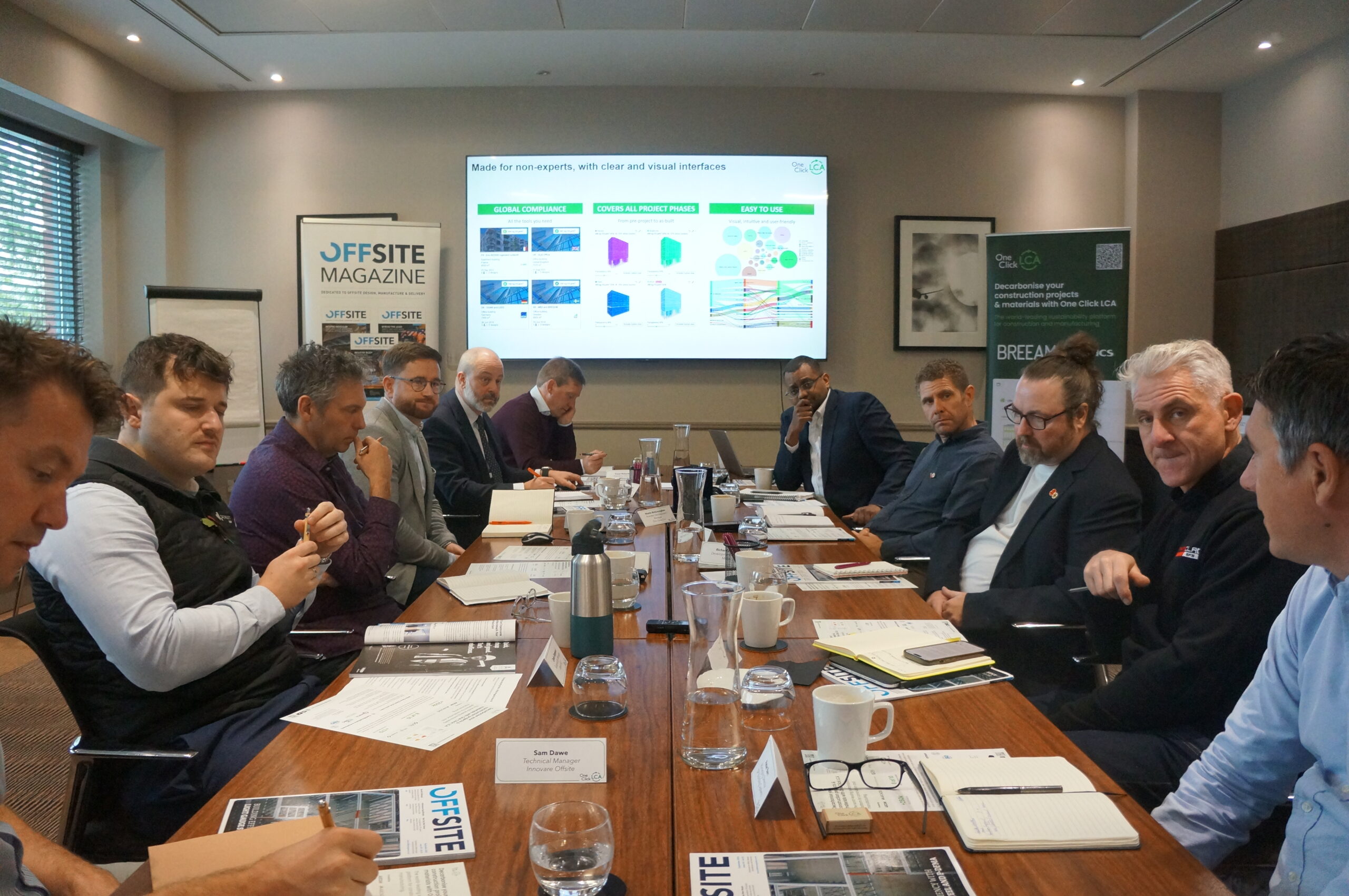
Understanding and measuring the environmental impact of construction products and manufacturing processes is central to the ongoing decarbonisation of the built environment. As part of this drive, EPDs have become an increasingly important way to provide standardised, third party-verification of carbon impact across a product – or building – lifecycle. Is this the new currency of low-carbon credibility in construction?
As elsewhere, the construction industry is increasingly driven by data with the built environment facing unprecedented carbon scrutiny, but as the panel made up from those across the offsite, consultancy, and manufacturing sectors discussed, EPDs are rapidly becoming a new commercial and regulatory driver that can’t be ignored.
One thing is clear. There is a decisive shift in the construction and manufacturing sectors to ‘data-verified, carbon transparency’ and that EPDs are rapidly moving from a “nice-to-have” status to a competitive, commercial (and eventually) regulatory necessity. Their value is recognised not only as a compliance tool but as credible proof of low-carbon performance, a market differentiator, and a mechanism for improving design decisions and whole-life carbon outcomes.
Although not mandated, EPDs are gaining momentum and offer a ‘gold mine’ of data that can justify product use and underline their environmental impact. The Department for Education (DfE) is leading the way, with environmentally focused targets for new schools to provide heathy places to study and work. Essentially, the DfE ‘owns what they build’, are asset managers and building performance is essential for them to understand.

“Whilst it’s not mandated,” said Sam Dawe, Technical Manager, Innovaré Offsite. “The DfE have introduced embodied carbon targets for Construction Framework 25. The reason that we’ve got an EPD done is because they have set out targets for the sub-structure, the main frame, the external walls, the internal walls, so projects awarded from 2025 in the next framework for primary and secondary schools, will have to demonstrate how we are accounting for embodied carbon.” If you can show a client that you have an EPD, it acts as an answer to many of their questions surrounding carbon credentials and makes your business an ‘easier choice’. The Future Home Standards standard – which is fundamentally connected to embodied carbon targets – will also likely mandate embodied carbon assessments, which to all intents and purposes leads to producing an EPD.
EPD adoption is accelerating as they help unlock a host of benefits, especially when involved with offsite framework requirements: specification preference, improved bid success, alignment with emerging regulations, enhanced investment appeal, and the ability to demonstrate genuine carbon transparency in a market where greenwashing is rife and carbon claims are frequently challenged.
How to combat this? As was outlined by the panel, there is a need for better consistency of data and a shared understanding of knowledge in similar – if not bordering on identical – products and systems. The offsite sector and its key materials – timber, light gauge steel and precast concrete – are all engaged in decarbonisation in their own ways, but what may be missing is a unified approach amongst similar product developers for industry-wide adoption.
It is universally acknowledged that the built environment needs to reduce its carbon emissions. Offsite manufacture is one sector that is better positioned that most to capitalise on this shift. The industrialised, factory-controlled environment naturally drives out waste, improves material efficiency, and supports circularity – advantages that traditional construction can rarely match. But without verified data, these advantages can remain invisible, or at least difficult to quantify.
The offsite environment means processes are more consistent, with ‘repeatable manufacturing cycles’ that can accommodate the EPD data gathering process more efficiently than traditional construction. Indeed, offsite could “outsmart” traditional construction if the sector moves together quickly, backed by strong data and shared standards. Trade associations have a role to play here in encouraging members to collaborate on common material-specific rules and guidance. This can go a long way to making EPD production simpler and cheaper.
For all the enthusiasm, nobody on the panel downplayed the difficulty of producing an EPD. Collecting accurate product and process data is time consuming, sometimes difficult and can be a prohibitively costly process, and when first beginning the EPD journey can be a ‘shock’. There is a requirement for detailed ‘granular’ records of energy use, material composition, waste production and recycling rates, transport, and people movements. The first EPD information gathering process is often a stark reality check, revealing data silos, many material assumptions and several operational blind spots.
Overall, there seems to be a “high level of ‘awareness’ of EPDs but very low level of understanding” on how to achieve them. The time from start to finish can also vary greatly depending on resource, complexity of product/system and size of business – initial EPDs can take 6-12 months on average. Experienced lifecycle analysis (LCA) consultants trained to interpret complex carbon modelling are busy and in short supply, and demand is in danger of overwhelming available expertise. However, EPD scalability can improve dramatically within organisations, with one business reporting that they completed: “four EPDs in three days after establishing robust internal processes and templated data for similar products.”
A key talking point surrounded the complexity and inconsistency of data. Ever-changing Product Category Rules (PCRs) can sometimes require EPD recalculation mid-process and despite the existence of standards, manufacturers interpret boundaries differently, especially ‘highly speculative end-of-life’ scenarios. It is impossible to predict what the UK waste landscape will look like in five years, never mind 75 years. “We’re often not talking about the same boundaries,” said Dr. Hafiz Elhag, Sustainability Manager – Concrete Products, MPA Precast. “We’re not actually talking about the same exact rules. There are lots of grey areas within the science of whole life carbon assessment and the science of EPDs. Unless you have some clear rules for every single sector, or the process of doing whole life carbon assessments, there will always be inconsistency. It’s causing a level of confusion. There’s no unified rule book that everyone follows.”
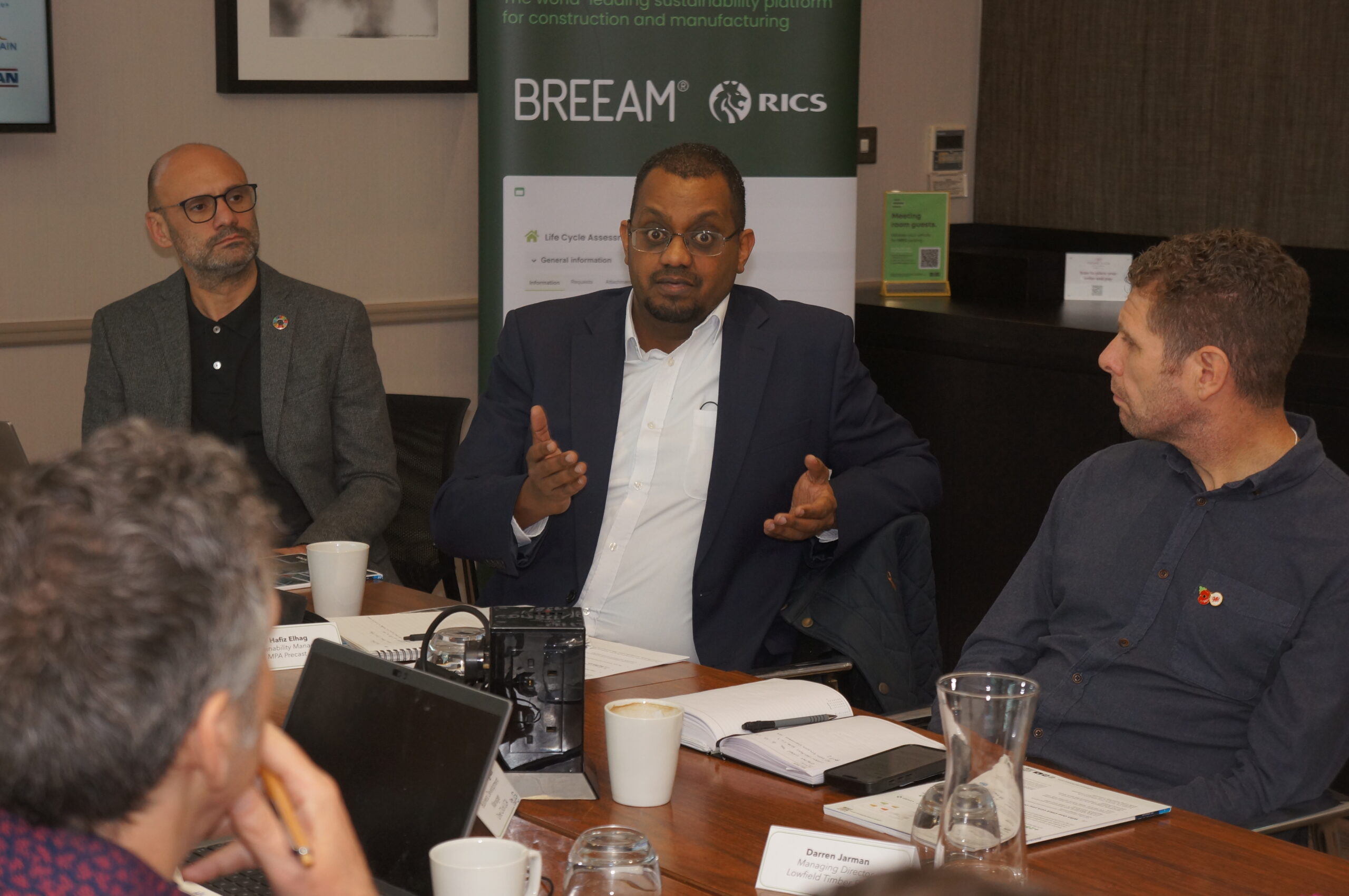
For all the inconsistencies, the significance of EPDs is huge. Europe has already grown from 3,000 EPDs in 2019 to around 23,000 in 2024, and in 2025 these numbers will be significantly higher. As Andrew Cowan – UK & Ireland Business Development Lead, at One Click LCA explained: “The level of product information is constantly growing and we are taking every EPD that’s out there globally, and putting it into our system and making sure the data available is taking everybody to another level of understanding.”
This suggests EPDs are not a ‘fad’ or part of the latest ‘green wave’ of thinking but a long-term structural and carbon reporting change. Given how long the process can be, starting the EPD journey early is essential, and this was highlighted as a strategic advantage: “what’s best practice today becomes standard tomorrow.” Early adopters can ‘beat the rush’ to EPD verification as client demand grows and verification queues increase, so the advice was clear – start the EPD journey now, or risk being left behind.
Although there is some uncertainty about the journey to securing an EPD – indeed, producing an EPD, “will never be harder than it is today”, it is increasingly understood that they are an enormous opportunity for every business to accelerate decarbonisation rates, strengthen market position, and demonstrate leadership.
The road to 2030 and 2050 net zero targets is paved with many obstacles but EPD investment, provides a credible, third-party verified way of demonstrating low-carbon performance in the construction industry. A badge of integrity and reputation, a tool of competitive advantage, a catalyst for better design decisions and – critically – proof that your sustainability commitments are grounded in data-driven, measurable reality.
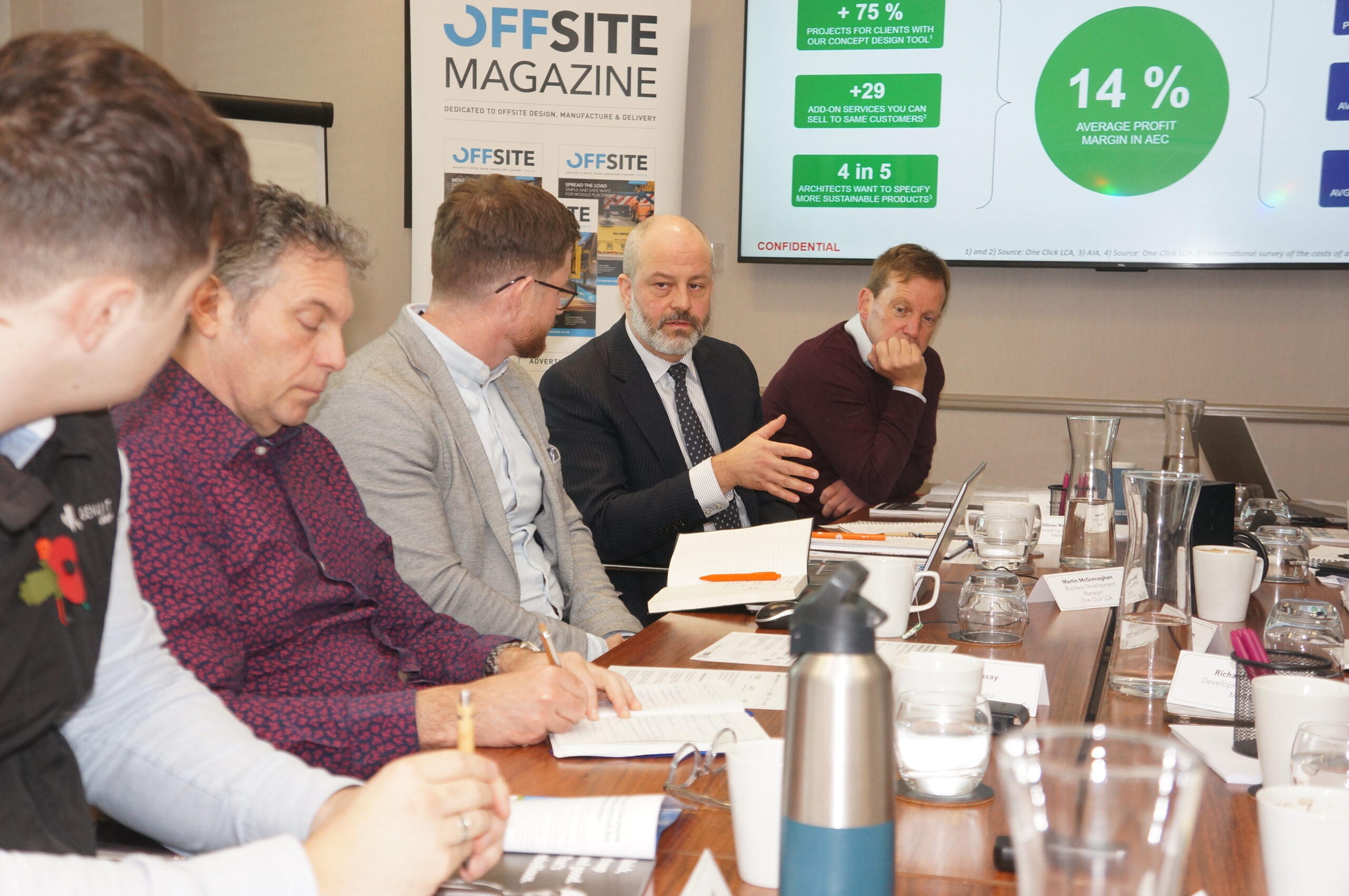
Many thanks to everyone that gave up valuable time to attend the discussion. Find out more about EPDs and how OneClick LCA can help at: www.oneclicklca.com/en-gb
The construction industry stands at a pivotal moment. In the wake of the Grenfell Tower tragedy, scrutiny has intensified around issues of competency and accountability – exposing significant gaps across multiple disciplines. In a dedicated roundtable sponsored by leading balcony systems manufacturer, Sapphire Balconies, hosted at the offices of law firm Browne Jacobson, Tall Buildings Media brought together a panel of experts, where the discussion focused on defining competency, evaluating enforcement mechanisms, emphasising the importance of collaboration, and examining how these elements play a vital role in achieving the industry’s urgent objective – successfully navigating Gateway 2.
As the industry continues to navigate the complexities of interpreting BSR guidance, roundtable chair, Darren Richards – Managing Director of Cogent Consulting – aptly sought to first clarify everyone’s understanding and definition of ‘competency’. Participants agreed that any comprehensive definition of competency in building safety regulation must encompass both technical expertise and behavioural elements. Paula Chandler, National Design Director at Wates, explained: “You can default to SKEB, so skills, knowledge, experience and behaviour, but I actually think it’s much more about the people, about the culture and behaviours. You might think you’re competent but what are we benchmarking that against?” She described Wates’ own approach to implementing competence, which involves developing an internal matrix to assess staff, with plans to apply the same system to consultants and suppliers. “We’re using tools and processes to try and take the emotion out.”

Competency, or ‘competence’?
Peter Caplehorn, Chief Executive of the Construction Products Association, expressed a preference for using the term ‘competence’, pointing to its significance in the post-Grenfell context. The CPA has played a central role in advancing competence across the sector, collaborating with the Industry Competence Steering Group and the Construction Leadership Council on key publications such as the ‘Raising the Bar Report’, ‘Setting the Bar’ and ‘A Higher Bar’. These reports reflect the industry’s collective efforts to strengthen competence standards. Peter also drew attention to the difficulties faced by SMEs and micro-enterprises in keeping pace: “My worry is that all the leading light companies are doing their level best to move forward, but we are lacking in terms of the long tail of the industry.”
Taking a broader view, Veronica Fiore, a Class 3 RBI, stressed that competence encompasses not just individual capability but also organisational capacity. She observed that while large developers are increasingly adopting matrices informed by regulatory feedback, smaller players continue to face considerable obstacles. She also highlighted that behavioural factors – such as trust, understanding and cultural change – remain the most difficult to measure.
Ron Hedger of FireTec succinctly stated that in fire safety, true competency simply means ensuring the job is done correctly. While SKEB methods can reduce the need for onsite inspections, they provide only an indirect indication rather than a genuine proof of competence. He emphasised that competency must be demonstrated in both design and installation, covering not only the physical systems but also the underlying fire strategies.
For Sapphire Balconies, compliance alone does not guarantee safety. Drawing on his experience of ‘bouncy balconies’, Brand Director Nick Haughton remarked: “Compliance alone doesn’t guarantee safety – a balcony can be technically compliant and still feel unsafe, which is why we’ve had to push for higher standards and benchmarks beyond what the codes currently demand.” The issue is compounded by differing international standards; for example, North American regulations are considered roughly 15 years behind current UK practices. Ultimately, companies bear the responsibility for raising their competency levels and enabling individuals to enhance their skills and knowledge through structured training and development processes.
Browne Jacobson Partner, Gavin Hoccom observed: “The challenge that all built environment stakeholders face is how to take the definition or at least the requirement around competence as it’s set out in the building regulations and interpret that within the context of what that stakeholder does, and that’s a challenge which a Tier 1 contractor will face at one end of the scale and it’s a challenge which a sole trader building an extension will face at the other end of the scale.”
He stressed that organisations should move beyond simply responding to compliance requests and instead take a proactive stance, demonstrating competence before it is questioned. This means dedicating time and resources to building and maintaining a centralised competence framework, enabling them to meet regulatory requirements more effectively while driving a more efficient, compliant industry.

Professional development
As in many sectors, professional development often takes a back seat to revenue-generating work. Yet, the roundtable consensus was clear – both companies and individuals must prioritise and invest in upskilling by creating structured training programmes and allocating dedicated time for learning, ensuring that industry standards continue to rise despite ongoing time pressures.
Peter noted: “I run one of RIBA’s helplines and I get people all the time saying, I’m running a ‘one-man-band’, I simply haven’t got the time to X, Y and Z, which is broadly about getting themselves up to date with the latest regulations.”
Collaboration and knowledge sharing remain vital for building skills. While digital tools have proven valuable, they have also replaced much of the face-to-face interaction that once strengthened teamwork. Paula emphasised: “It’s incumbent on us to train people in those tools, but actually alongside this, we need face-to-face collaboration – let’s get round the table, roll our sleeves up and solve the problem.”
As a member of CABE’s Membership and Professional Standards Committee, Veronica spoke passionately about the importance of employer-backed support for sustainable CPD and professional growth. She argued that CPD should be built into regular work routines rather than left for individuals to manage in their own time, as this approach signals a lack of true organisational commitment.
So, what truly drives professional development – encouragement or enforcement? Ron questioned: “The bit that’s missing is what happens if you don’t demonstrate that behaviour, both as an organisation to develop and support your people to be competent, but also as an individual who maybe has had a bad day and produces something which doesn’t do the job, as a one-off or regularly? The two things that are missing are the rigorous enforcement, both of demonstrating competence in SKEB, but also demonstrating competence in doing the job.”
In addition to strict enforcement, positive incentives are essential to encourage the right behaviours. Nick shared Sapphire’s approach: “We have appraisals on a quarterly basis. Employees are scored on behaviours, and learning is one of the aspects that they’re scored against. If people have demonstrated good examples of doing this, they get an increase in their bonus.”
While commercial CPD solutions provide structured learning, they risk diminishing intrinsic motivation and the overall quality of outcomes. Many around the table agreed that CPDs can easily become a tick-box exercise, eroding the genuine value of learning and weakening professional development. Virtual training adds another challenge. While some sessions foster strong interaction, others – especially when participants leave their cameras off – struggle to engage attendees.
What’s needed is an aspirational culture. Healthy competition, recognition and awards can inspire people to exceed expectations, but integrity must remain at the core. Peter reflected: “I think, unfortunately, we are a little bit hard on ourselves. We have a very ‘glass half empty’ approach, whereas I think we need to somehow create a more aspirational culture for people to naturally want to get better.” Fostering this kind of culture nurtures pride and drives higher standards across the profession.

Gateway 2 challenges
A key factor prompting professionals to re-evaluate their competence has been the latest challenge posed by the Gateway 2 application process. With a high rate of rejections and invalidations, missing critical information has contributed significantly to delays and backlogs within the BSR. At Wates, however, the limited feedback available has been turned into a learning tool to track and address compliance gaps. Paula explained: “We haven’t navigated Gateway 2 fully yet, we have a number of projects in flight, but what we did do was take the rejection notices and we used that as our route map for compliance.”
The panel largely agreed that to align with the current gateway regime, methodologies, such as the RIBA Plan of Work, need updating. Paula stressed the importance of shifting mindsets away from previous practices and embracing new terminology and minimum requirements at each gateway stage.
Ron echoed this view: “The Building Safety Act is now forcing us to build correctly. I have not got any submissions actually to Gateway 2 yet, but the process is exactly the same as I have developed for any other design fire strategy and this is why I agree that the RIBA stages just don’t fit. For fire safety, they just don’t apply. They don’t correspond to the development stages of the design fire strategy.”
Uncertainty surrounding Gateway 2 guidance has long been a point of contention, with the BSR declining to provide ‘templates’, arguing that they would create a minimal benchmark for compliance. According to Nick, this has led to significant inconsistencies in how applicants demonstrate competence – some submissions are detailed and robust, while others depend on basic tick sheets. Moreover, feedback from rejected applications is rarely shared, preventing the industry from learning and improving its overall competency.

Resources and constraints
Since taking on responsibility, the BSR has been transparent about its limited resources, a sentiment echoed by those around the table. Veronica shared her experience, noting that communication with the BSR was initially strong. A case worker was assigned, and updates on applications were regularly provided through meetings and direct phone calls. However, as the number of applications increased, responses became less frequent. According to Veronica, there are no formal systems to track applications, turning the process into a waiting game without any way to monitor progress.
Peter and Nick both reflected on the serious challenges facing the market, particularly the commercial and financial impacts on the industry. They highlighted concerns about potential revenue shortfalls for businesses trading solely within the UK, as well as the long-term risk of losing supply chain capacity if the current issues continue. Peter warned: “Once we lose capacity from the supply chain, it’s gone for a long time. Skilled workers move to other industries or different manufacturing sectors, and that capacity is effectively lost. Losing key supply chain members poses a serious threat to construction across the UK.” Nick emphasised: “This seems like it isn’t a commonly-known or considered consequence of the current delays.”
Another pressing challenge involves PCSA agreements and the risks tied to early engagement. Nick pointed out that design teams are increasingly required to commit early in the design process under PCSA agreements, which demands significant upfront work without guaranteed returns if projects fall through. He described the struggle faced by smaller firms: “They invest their limited resources early on, then face long application delays. A year later, no revenue has come in, no payment has been made for design work, and the project may still be lost down the line.” Nick emphasised the need to revise these agreements to better protect smaller companies and ease the financial pressures linked to early involvement.

A transparent system
Transparency in the application process is essential at every level. There was broad agreement around the table that not only is there significant uncertainty about what the BSR expects from a ‘successful’ application, but once an application is submitted, it effectively disappears – untraceable until a decision is made.
Paula suggested simple improvements: “An automated online system that tracks the progress of an application would be a great start. Additionally, implementing a pre-application process would help. This would involve scheduling and logging a meeting where applicants can present key compliance evidence to the regulator in advance, so they are familiar with the details rather than encountering them for the first time at the decision-making stage.”
It’s clear that the lack of feedback is a major barrier to industry development. Where is the evidence of a feedback loop back to manufacturers, enabling the creation of safer products and, ultimately, safer buildings? Regarding the Building Safety Regulator’s KPIs, Nick pointed out that current metrics don’t fully support the goals of improving application processing or enhancing industry safety. Having utilised a FOI request to obtain data, he noted: “The BSR stated their only KPI is the requirement of 80% of time to be allocated to projects, which makes sense as an individual metric. But what about guidance on moving forward and making progress? Why don’t they take more interest in the numbers similar to regulators like Ofgem who are conscious of what’s happening in the industry more generally?”
The industry must take responsibility for continuous improvement, which can only be achieved through a holistic approach – one that integrates all relevant advisory bodies and ensures information flows back into the system. This will drive practical, meaningful change.
Though change is already underway, as the boardroom acknowledged and welcomed the recent leadership shake-up announced that week, with MHCLG taking the lead. Peter was quick to affirm that the new leaders at the BSR are well positioned to grasp the broader challenges. He noted that Alex Norris, along with Andy Rowe and Charlie Pugsley, fully understand the task ahead – supporting the Government’s goal of delivering 1.5 million homes while prioritising residents’ safety. Peter added: “There are numerous committees, initiatives and working groups actively engaged to ensure skilled professionals are supported within the sector. I believe the new leadership will focus on ensuring all these efforts run smoothly, efficiently and continue to make progress.”
Commenting further on the new leadership, Gavin emphasised the need for consistent, positive and regular communication with the industry to restore confidence in delivering tall buildings. Paula agreed, sharing her optimism: “I genuinely believe we’re in the most transformative period the industry has seen in decades, and it truly excites me. It’s unfortunate that it took recent events to force us to reflect, but I’m incredibly excited about the future.”
The mood of positivity was shared widely. Nick added: “Peter, you mentioned about the end of the beginning. It reminds me of Churchill’s speech. I wonder whether we’re now coming to the finest hour, if you like, of actually what Paula talks about, of lot of transformative change and genuinely good thinking around projects, coupled with the movement forward in the industry to hit numbers, highly ambitious numbers, and with consideration for the commercial aspect of it. From where I’m looking at it, the delays have been starving good practices and good behaviours out of the new building industry in particular. I’m quite excited to see what happens now, but it’s not without challenges, either.”
As the discussion drew to a close, the collective sentiment was one of cautious optimism. Competency in building safety regulation, while complex and multi‑layered, is not an unattainable goal; it hinges on a shared commitment to raising standards through technical expertise, behavioural accountability and cultural change. The challenges, posed by Gateway 2, resource limitations and an often-ambiguous regulatory process, reaffirm the urgent need for greater transparency, collaboration and proactive professional development across the industry. Yet, with new leadership at the BSR and a renewed industry‑wide focus on competence, there is a feeling that transformation is underway – one that prioritises safety, fosters trust and positions the construction sector to meet the demands of the future with integrity and confidence.
ROUNDTABLE ATTENDEES
- Darren Richards, Roundtable Chair and Managing Director, Cogent Consulting
- Nick Haughton, Brand Director, Sapphire Balconies
- Peter Caplehorn, Chief Executive, Construction Products Association
- Paula Chandler, National Design Director, Wates Construction
- Veronica Fiore, Associate Director, Hunters and Vice President, CABE
- Ron Hedger, Technical Director, TecFire
- Gavin Hoccom, Partner, Browne Jacobson
- Hannah Woodger, Editor, Tall Buildings Media

ABOUT SAPPHIRE BALCONIES
Sapphire Balconies is a leading manufacturer and supplier of innovative, lightweight aluminium balcony solutions, serving the mid- to high-rise residential construction sector. With a strong focus on quality, safety and design efficiency, Sapphire delivers modular balcony systems that are streamlining the way balconies are specified, manufactured and installed across the globe.
To learn more about Sapphire Balconies, explore their vision for the future of residential construction or to request a design meeting, visit www.balconies.global, email support@balconies.global or call 0344 88 00 553.
Industrialised construction in the UK stands at a pivotal moment. For years, the sector has promised faster delivery, higher quality and lower carbon.
Pilot projects have proven the potential, yet progress at scale remains frustratingly elusive.
A recent roundtable brought together leaders from across the industry to explore the barriers, with the discussion revealing both optimism and deep-rooted challenges.
Defining the outcomes
A recurring theme was the absence of clear, measurable outcomes set by government. Without them, participants argued, industry cannot align investment or demonstrate progress.
Ron Lang reflected that too much effort has gone into promoting solutions, rather than asking the right questions. “If targets were set around labour efficiency or embodied carbon, industrialisation would follow naturally. But at the moment we’re neither setting expectations nor measuring progress and without that, change will stall.”
Keith Waller added that construction has become fixated on improving “pieces of the puzzle” rather than defining the bigger picture. Until a coherent national vision is established, he warned, the sector will only achieve incremental gains.
Pipelines without confidence
The debate quickly turned to the issue of project pipelines. Successive governments have promised visibility of future work, but the detail remains patchy.
For clients and contractors, this creates constant uncertainty. For SMEs, it is existential.
Too often they are invited to frameworks with the promise of opportunities that never materialise, leaving many “limping by,” as one participant described.
Emily King was clear that published pipelines lack the granularity needed: they rarely provide enough information for manufacturers to invest in people or facilities with confidence.
The group contrasted the UK’s fragmented pipeline with more coherent regional approaches.
Several argued that combined authorities, with devolved powers, may offer a better setting for industrialised programmes, smaller in scale but more tangible and deliverable.
A question of coordination
Several speakers suggested that client coordination, particularly within the public sector, has eroded over time.
During the post-war period, the state was able to deliver hundreds of thousands of homes and schools annually, albeit at varying levels of quality, because government acted as a capable, coordinated client.
Today, the picture is different. Frameworks are often used as a substitute for strategic planning, yet they are designed primarily to simplify administration rather than to secure value.
Richard Crosby noted that many frameworks fail to capture lessons learned or pass knowledge through the supply chain.
Instead, the sector finds itself competing within fragmented systems that add little certainty.
Procurement, risk and liability
Procurement practices remain a stubborn obstacle. Industrialised methods demand long-term relationships and consistency, yet public sector contracts often prioritise short-term price over collaboration.
Risk allocation is another sticking point. The desire to pass liability down the supply chain has left SMEs fragile and overexposed.
Emily explained that efforts to retain design liability at programme level could protect smaller suppliers, but the legal and contractual complexities remain daunting.
Crosby agreed, observing that risk management in construction too often means “transfer, rather than reduction,” creating fragility rather than resilience.

Measuring success
If government set clearer outcomes, the group argued, then measurement would follow naturally. Yet suitable metrics remain elusive.
Current data on productivity, for example, is blunt and misleading, lumping together productive sub-sectors such as civil engineering with weaker performers like general building.
Keith argued that more meaningful measures would resonate better with the public as well as policymakers: faster delivery, reduced vehicle movements, or fewer defects. “Those are the things communities care about,” he said.
The conversation also touched on the role of data and technology. Sam Stacey pointed to the potential of IoT and AI: by monitoring performance across programmes, he suggested, the industry could learn quickly and continuously improve.
But as Emily cautioned, statistics already tell a stark story: the number of SMEs going into administration while on public sector frameworks is a clear indicator that the system is struggling.
Leadership and accountability
Beyond procurement and pipelines lies a more fundamental challenge: leadership. Many participants lamented the lack of political accountability in the UK compared to other countries.
Sue Hine pointed to Ireland, where ministers must regularly report progress against housing and infrastructure targets.
That accountability, she said, forces action. By contrast, in the UK the construction portfolio is usually a small part of a minister’s brief, spread thinly across departments, with no clear centre of gravity.
Keith and others argued for a more senior champion of the built environment within government, someone with the authority to align health, education, housing and transport under a coherent strategy. Without that, fragmented responsibilities will continue to produce fragmented results.

Towards transformation
Despite the frustrations, the session closed with optimism. Asked what single “game changer” could drive industrialised construction forward, participants offered a range of answers.
For Emily, it was client and supplier co-creation: designing products, processes and even contract models together, rather than in isolation.
For Katie Rudin, it was clarity on affordable housing commitments, so that developers, housing associations and local authorities could all plan with certainty.
Trudi Sully emphasised the need for consensus: a shared understanding of definitions and priorities so the industry can speak with one voice.
Others focused on outcomes and measurement.
Ron called it “the single fundamental driver of change.” Mike Pitts urged a shift to procuring on performance, not promises.
And Richard pointed to the need to break from construction’s linear sequencing in favour of parallel processes that reduce time and cost.
A sector ready to scale
What united all perspectives was a conviction that industrialised construction is not a theoretical ambition but a practical necessity.
Skills shortages, climate targets and public demand for better outcomes will make traditional methods increasingly untenable.
As Darren Richards, chairing the discussion, summed up: “If we don’t get this right, no matter what we do with the nuts and bolts and the tech, it’s not going to happen.”
The jigsaw pieces, as Keith described them, are largely in place.
But without a clearer picture to guide the assembly, defined outcomes, coherent pipelines, smarter procurement and accountable leadership, the puzzle will remain unsolved.
Lessons learned
- Clarity of outcomes is missing – Without measurable government targets, such as reductions in carbon, improvements in labour efficiency or faster delivery, industry cannot align investment or demonstrate progress. Participants warned that the focus has been on promoting solutions rather than defining the problems outcomes should solve.
- Pipelines lack confidence and detail – Promised visibility of future work remains patchy. For SMEs in particular, frameworks often create false expectations, leaving businesses unable to invest. Regional or devolved programmes were seen as more tangible models than fragmented national pipelines.
- Client coordination has diminished – Where post-war government once acted as a coordinated client, today frameworks often substitute for strategy. Knowledge transfer is poor and fragmentation prevails.
- Procurement and risk remain barriers – Current practices prioritise short-term price and transfer liability down the supply chain, leaving SMEs vulnerable. Industrialised approaches require long-term relationships and fairer risk allocation.
- Measurement must reflect real outcomes – Blunt national productivity data obscures progress. Metrics such as reduced defects, fewer vehicle movements and faster delivery would resonate more with communities and policymakers alike. Digital technologies could enable better monitoring, but current statistics already show distress, especially among SMEs.
- Leadership and accountability are absent – Unlike countries where ministers report against housing or infrastructure targets, the UK disperses responsibility. Participants called for a senior champion to unite health, education, housing and transport under a coherent strategy.
Packaged Utility Rooms (PUR) are a commonplace part of the offsite spectrum but also a slightly misunderstood and underreported one. An industry roundtable hosted by PUR specialists Resipoint, highlighted some important sector issues plus what to expect in the future.
PURs have long offered a prefabricated, fully integrated service solution for both residential and commercial buildings. These pre-assembled, factory-built units are designed to house essential building services such as plumbing, electrical systems, heating, ventilation, and even laundry or storage facilities, before transportation to the construction site for installation. This allows developers to reduce cost, give architects and building designers a creative floor space solution and for contractors – save critical time on-site, whilst improving quality control.
They have also emerged as powerful enablers of the industry’s continuing shift toward design for manufacture and assembly (DfMA) and industrialised construction methods to enhance quality, energy efficiency and ease of maintenance. The concept promises swathes of efficiency, improved productivity, better quality, and compliance in equal measure, but the reality is more nuanced.
While PURs are discussed as part of offsite innovation, developers and specifiers wrestle with core questions: do PURs deliver measurable programme benefits? Can they genuinely support the Golden Thread of information demanded by the Building Safety Act, where do the commercial tipping points lie, and crucially what stands in the way of wider adoption, with traditional in-situ installation still seen as less of a risk?

The case for early engagement
As with many construction-related problems, the solutions rest in early engagement and better planning. Offsite manufactured solutions require design decisions to be locked in earlier than traditional builds, although the BSA is rapidly changing this approach. Early collaboration between architects, M&E consultants, and manufacturers – with more Building Information Modelling (BIM) can help integrate PUR layouts at concept and master planning stage. PURs can compress construction programmes, but programme savings rely on clear ‘linear management’ and early decision-making to gain the maximum benefits. A lack of this can see a disjointed critical path, with units arriving early on-site – or even sat idle waiting for commissioning –to put undue pressure on the rest of the construction programme.“The merit in an offsite manufactured solution is if the main contractor and developers can make a decision early and that decision can be shared with the supply chain,” said Sat Lola, Head of MEP at Mount Anvil. “Effectively – invest time upfront – at RIBA stages 3-4 – and the savings and value will come later with exponential gains in delivery at stage 5.
Standardisation – what is it?
If there is any part of the offsite spectrum where standardisation offers a prime opportunity to maximise cost and critical path benefits – it is a PUR. As pointed out many times during the discussion, PURs rarely vary in terms of the typical content and can accommodate reconfiguration to suit. They have a predetermined carcass and house ‘predictable’ components such as MVHR units, heat interface units (HIU), metering and similar components. Maintaining a consistent carcass and core layout – while swapping out components to meet specific system or client requirements – offers ‘invisible standardisation’, that from a manufacturing perspective, drives volume efficiencies.But there is industry tension here. Developers worry about standardisation not meeting specific site or client needs, but as pointed out: “There as many opinions about what standardisation means as there are people in this room.” The ethos of higher standardisation means the more competitive the unit, with a rationalised matrix of cupboard types delivering ‘meaningful’ efficiencies and top quality.
Different permutations require understanding that diverse types of cupboards and heating issues can be different thereby creating conflicts. “Standardisation is great, but the overriding objective must be: are we satisfying the design requirements for the apartment?” said Eddie Beer, Director at IN2. “An average customer may not necessarily appreciate a well finished utility cupboard, but they will definitely notice a poorly finished one.”
The point of standardisation is to move away from introducing more work into project complexity – it is important to see where value can be added. “It makes it easier if we can rationalise and standardise the cupboard layouts,” said Wahid Sohrabi, Design Manager for Woodford. “If various types and size of manufactures can get involved earlier and present a standard RIBA stage 2 design, it becomes less problematic and easier to design co-ordinate. These important considerations must be made early on.”

The Golden Thread
The Building Safety Act (BSA) has profound implications for everyone working in the built environment. The Golden Thread – where components should demonstrate a ‘verifiable, traceable and auditable pathway’ – is central to on-going building safety management and compliance. PURs have an inherent advantage by being manufactured in a controlled factory setting. Every component, piece of product information, serial number, and test result can be digitally recorded and linked to an ‘as-built’ model.An information pack – accessible by a simple QR code – can link to a compilation of traceable and verifiable PUR information. This will create a stronger compliance pathway than fragmented on-site installations. The BSA has focused minds on getting design done earlier and forcing more of a collaborative environment, something the construction industry constantly says it needs more of but struggles to achieve. But what it certainly does is ‘reduce complacency’.
Embodied carbon
As net zero targets loom, the ‘intangible’ benefits of PUR need to be more clearly communicated. Embodied carbon and product lifecycle analysis impacts are rising on client agendas and across ESG strategies, alongside circularity, increased social value – these are all hidden, difficult to quantify and to put a price on. Theoretically, a prefabricated option should allow all these markers to be managed better than a traditional in-situ option. PUR align well with digital product passport strategies, capturing data on product composition, recyclability, and environmental performance.The complication in building a case for offsite here is comparisons. Ideally a lifecycle analysis (LCA) of a ‘traditional’ build as a comparator to a ‘prefabricated’ build is needed to make an estimation of what does work and doesn’t work and where best to optimise. “We need to commit to share more detail on the strategy of how things are done traditionally,” says Andy Seary, Group MEP Director at C Watkins. “We can then get a better understanding of where we can all benefit from a modular approach.”

Commercial realities
Perhaps the most persistent barrier to PUR adoption is perceived cost. Many stakeholders perceive PUR solutions as costlier than traditional on-site assembly due to upfront design, engineering, and factory production costs. This perception is overshadowing the tangible long-term benefits of offsite. The business case hinges on demonstrating ‘cost neutrality’ whether this be through programme savings, reduced snagging and maintenance and overall risk mitigation.A key talking point surrounded the clarity of responsibility across the supply chain, particularly around defects, warranties, and aftercare.
Poor interfaces remain a ‘pain point’. Clearer lines of responsibility are required to determine accountability for defects, including how costs and warranties are allocated among M&E contractors and identifying who is responsible for addressing and resolving issues. Written agreements should be established to commission warranties through the M&E contractor. Perhaps new contracting models may need to emerge to address these complexities and improve process efficiency.
Despite strong logic and emerging case studies of successful projects – it seems that PUR adoption remains patchy. Why is this? There is still some cultural construction resistance. Adversarial DNA still fuels mistrust around cost transparency and protectionism amongst supply chain relationships. There is also supply chain fragmentation with too many stakeholders and too few collaborative frameworks. This lack of transparency stymies collaborative culture.
For sure, too many assumptions are made about what goes on within a traditionally fitted out M&E package. Prefabricated systems are painstakingly detailed, and more work needs to be done across the sector to ‘overlay’ the two process maps to understand how they compete and how best to get the most from each and figuring out where the process can be best synchronised. There is even a case for mock-up within a factory environment to create ‘real life’ scenarios reflective of the environment the PUR will be in, so M&E contractors can understand what is required – especially regarding interfaces.
“Challenges still surround the management of interfaces,” said Eddie Beer. “Standardisation and trying to get to a stage where you understand the PUR permutations for a 500-unit scheme and trying to co-ordinate the interfaces behind dropping a single cupboard into perhaps 20 different apartment types and making sure that your extracts, intakes, pipework, etc all connect at the appropriate point and with the correct tolerances can be a challenge. We recommend a fully co-ordinated model at RIBA stage 4 or 4C before manufacture.”
Plan for prefabrication
A PUR may be the first and last thing a user sees in entering and leaving their apartment, so it’s got be right. They represent one of the most practical pathways to industrialised construction and as the discussions showed, there is a lot of positivity around the general direction of travel of PUR, but their adoption and strategies to increase their usage across the construction sector is complex. Everyone agreed that PUR technology is exceptional and of the highest quality, but is there a fulling compelling argument with evidence that they do work? There is still a challenge to convince clients, developers and contractors. Adoption of PUR is certainly not stifled by technology advances. For future success, addressing misconceptions about cost and supplying hard data to substantiate the many anecdotal claims, manufacturers and contractors can truly unlock the full benefits of PUR technology.Many thanks for everyone that gave up valuable time to attend the discussion. Find out more about PURs and Resipoint at: www.resipoint.co.uk

Takeaways
- Early engagement – confirming the offsite approach at RIBA Stage 2 ideally, enabling design co-ordination and procurement alignment. As with virtually everything construction related, the case for PUR begins with early specification
- Heat Pumps – an underdeveloped market opportunity exists for the introduction of more heat pumps into the PUR offer but with reduction in fittings – it’s not the simple ‘plug and play’ option
- Warranties – clear allocation of risk and responsibility, particularly surrounding defects
- Communication – better education of project stakeholders on programme certainty, sustainability benefits, and quality assurance and the overall ‘intangibles’ associated with PUR
- Building Safety Act – this is focusing minds on better collaboration and clearing away ‘complacency’ using the Golden Thread of information.
- Data – the need to collect and share LCA, EPD data to explain the carbon benefits and circularity/net zero aims, especially surrounding embodied carbon. Too many anecdotal claims – what is required is hard data to plug into a system/spreadsheet and provide a trusted measurable answer
- Cost Neutrality – a better and more robust way to identify cost savings and demonstrate programme benefits for offsite vs traditional in-situ methods. Valuing lifecycle outcomes over upfront price and replacing fragmented decision-making with collaborative, evidence-driven strategies. This is a PUR manufacturer imperative.
Attendees
- Facilitator: Darren Richards, Managing Director, Cogent Consulting
- Eddie Beer, Director, IN2
- James Cregan, Senior Technical Director, Mount Anvil
- Grant Davies, Sourcing & Innovation Manager, Resipoint
- Simon Lindop, Head of Cost Planning, Mount Anvil
- Sat Lola, Head of MEP, Mount Anvil
- Vernon Milner, Project Co-ordinator, Resipoint
- Laurie Pomeroy, Managing Director, Resipoint
- Andy Seary, Group MEP Director, C Watkins
- Wahid Sohrabi, Design Manager, Woodford.

Industrialised Construction Media Ltd
Suites A & B Hermes House,
Oxon Business Park,
Shrewsbury,
SY3 5HJ
© 2026 Industrialised Construction Media Ltd. All rights reserved. Registered in England and Wales #16508299. Registered address: Hermes House, Oxon Business Park, Shrewsbury, SY3 5HJ